| |
| Wednesday, 04 November 2026 |
| In the footsteps of Wren: The Architecture of Norman Foster and Richard Rogers |
| Brian Stater |
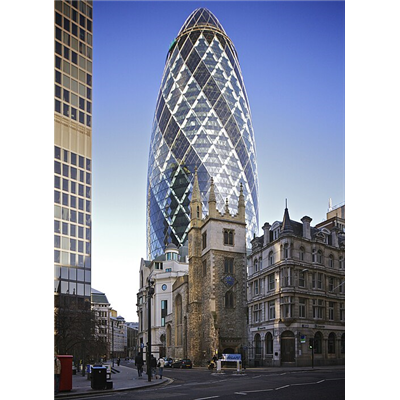 |
Whenever a radical building appears, someone, somewhere, insists: “Christopher Wren would be turning in his grave.” That barb was certainly endured by Richard Rogers and Norman Foster, who embraced modernism, building in steel, glass and concrete, while Wren designed in the classical style, using timber and stone. But when Rogers was awarded the Royal Gold Medal for Architecture, the citation observed that he was “the rightful heir to the traditions of Wren”. And the same might very well be said of Foster. In other words, there is a strong sense that, rather than revolving at high speed, Wren would approve of the men long recognised as the leading British architects of our era. Wren transformed the London skyline, he had a restless and brilliantly inquisitive mind, and believed that progressive design would enhance the function of his buildings. All of which applies, as we’ll see, to Foster and Rogers, who met, as students, and went briefly into partnership before embarking on different routes to the summit of architecture. Rogers produced buildings such as the Pompidou centre in Paris and the Lloyds building, in London. Foster’s portfolio includes the famous Gherkin, the Great Court at the British Museum and an amazing viaduct in southern France. And what of the traditions of Wren? He transformed the London skyline, he had a restless and brilliantly inquisitive mind, and believed that progressive design would enhance the function of his buildings. All of which applies, as we’ll see, to Foster and Rogers. And there' one last parallel. Christopher Wren had battles with planning authorities too! Image: St Mary Axe from Leadenhall Street, Aurelien Guichard, London. CC BY-SA 2.0 via Wikimedia Commons |
|
| Wednesday, 02 December 2026 |
| Shepard's Christmas |
| James Campbell |
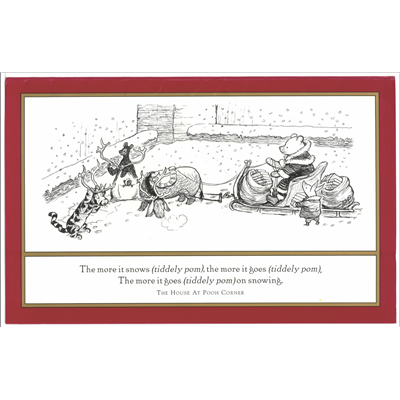 |
E H Shepard loved Christmas, and this lecture describes, including his own words much of the magic and joy of successive festive seasons, from those of his own childhood to others throughout his long life. We see a range of artistic styles from full colour images to pen-and-ink personal Christmas cards, with cartoons, drawings and watercolours, some featuring the iconic images from the Wind in the Willows (the snow in the Wild Wood…) and Winnie-the-Pooh (Pooh and Piglet from The House at Pooh Corner). Many of the images have not been published for over fifty years. Image: Courtesy of James Campbell |
|
| Wednesday, 06 January 2027 |
| The Art of the Hero: Commemorating Scott of the Antarctic
ZOOM INTO THEYDON BOIS VILLAGE HALL |
| Max Jones |
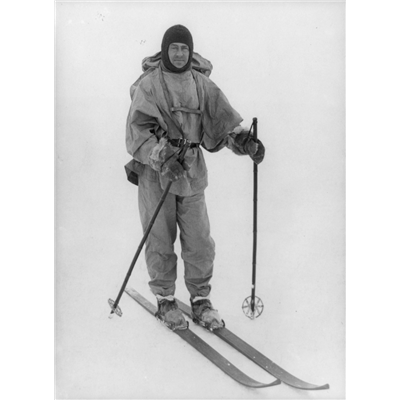 |
Captain Scott and his four companions died in the Antarctic in 1912. Although they had lost the race to the South Pole to Norwegian Roald Amundsen, their deaths unleashed an astonishing wave of tributes not only in Britain but around the world. This lecture will examine the different ways in which artists represented death in the polar wasteland and portrayed failure as heroic sacrifice. Outstanding. 'A brilliant lecture - informative and entertaining' - Bowdon Branch Outstanding. 'Lively and energetic, Max enthralled us with his knowledge and fascinating approach ... Witty too …..highly recommended' - Upper Thames Branch Image: US Library of Congress, public domain |
|
| Wednesday, 03 February 2027 |
| Sorolla - Setting the Mediterranean Alight
ZOOM INTO THEYDON BOIS VILLAGE HALL |
| Stella Lyons |
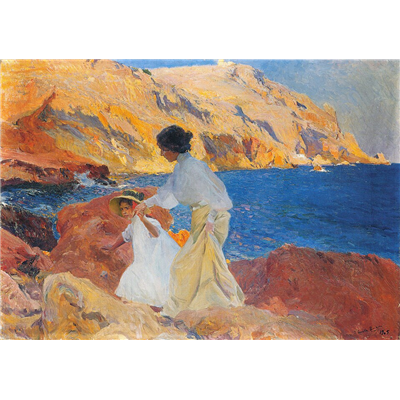 |
In his lifetime, Sorolla was considered the most famous artist to come from Spain. More Spanish than the Alhambra, more passionate than Flamenco, more sunny than a holiday in Marbella, he captured in his paintings all the exuberance of his native country. So why don’t we know more about him? This talk will explore the so-called Spanish ‘Master of Light’: from his paintings of sunlit beaches and gardens to scenes of fishermen and rural life, as well as portraits of the love of his life, his wife Clotilde. Image: Clotilde y Elena en las Rocas, Jávea (public domain) |
|
| Wednesday, 03 March 2027 |
| The Painted Hall at Greenwich |
| Nick Salmond |
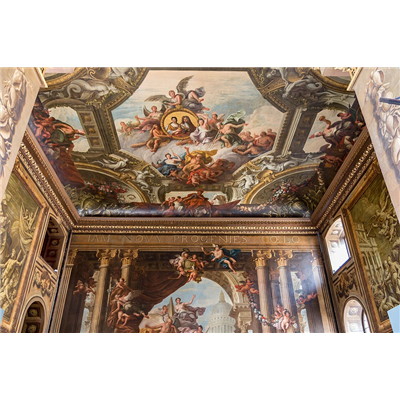 |
The Painted Hall in the Royal Naval College at Greenwich is a masterpiece often called Britain's Sistine Chapel. Inside you will find paintings covering over 3,700 square metres of the Hall's walls and ceiling, created by the artist Sir James Thornhill. In this lecture we tell the story of the Hall and explore some of the 200 images on display, explaining their significance and meaning as they mark the state of Britain in the early 17th century. Image: Painted Hall, Royal Naval College, Greenwich by Christine Matthews, CC BY-SA 2.0 via Wikimedia Commons |
|
| Wednesday, 07 April 2027 |
| The Queen Mother at the Castle of Mey |
| Jeremy Mainwaring-Burton |
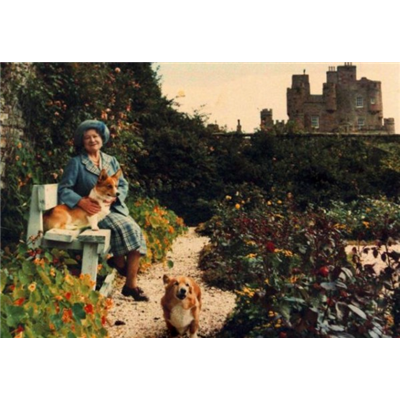 |
The Castle of Mey was the only property the Queen Mother ever owned and she would spend every August there surrounded by members of her Household and staff and a number of guests. Jeremy first stayed there in the late 1970s while serving as Her Majesty’s equerry and on many occasions thereafter as one of her guests. This presentation is based on personal experience and cannot be described as an academic study. Nevertheless, it is a fascinating account of what it was like to stay at the Castle of Mey, not just for those of us lucky enough to be invited as guests but also for our royal hostess. Image: https://ru-royalty.livejournal.com/5773474.html, unknown author, CC BY-SA 4.0 via Wikimedia Commons |
|
| Wednesday, 05 May 2027 |
| Matisse in Moscow: A Revoluntionary Collection in Pre-Revolutionary Russia |
| Rosamund Bartlett |
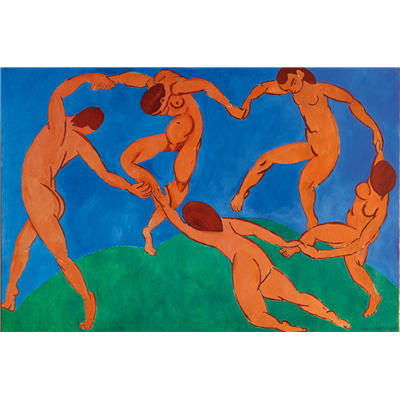 |
In 1909, Henri Matisse received a commission from his Moscow patron Sergei Shchukin for two enormous canvases. After creating a scandal by showing Dance and Music at the Salon d'Automne, Matisse travelled to Russia to help instal them in the stairway of Shchukin's mansion. This lecture tells the story of how a Russian industrialist fell in love with Matisse after infatuations with Monet and Gauguin, how Matisse fell in love with Russian icons, and how his riotous paintings electrified the artistic rebels of Moscow's young avant-garde. Image: Matisse La danse Hermitage (https://www.wikiart.org/en/henri-matisse/dance-ii-1910) |
|
| Wednesday, 02 June 2027 |
| 160 Years of London Underground Design and Architecture |
| Mark Ovendon |
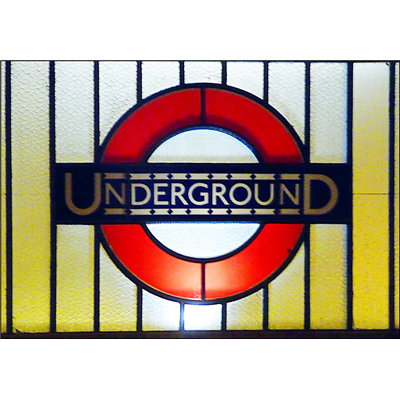 |
This lecture covers surprising attempts to create some graphic unity, even in the 1860s and 70s, expansion of the Underground and the need to create some cohesion between the different operating companies, Leslie Green's architecture and the Arts & Crafts movement, Frank Pick, Edward Johnston's typeface, Charles Holden's architecture and the Streamline Moderne/Art Deco movement, the New Works Programme, post war austerity/design, Victoria Line, loss of Johnston and rescue by Kono, Jubilee Line Extension/architecture, creation of TfL, recent schemes and future works including the Elizabeth Line/Northern Line extension to Battersea etc.. Images George Rex from London, England, CC BY-SA 2.0 via Wikimedia Commons |
|
| Wednesday, 07 July 2027 |
| Ancient Roots: How the Romans set the seeds for our garden designs |
| Gillian Hovell |
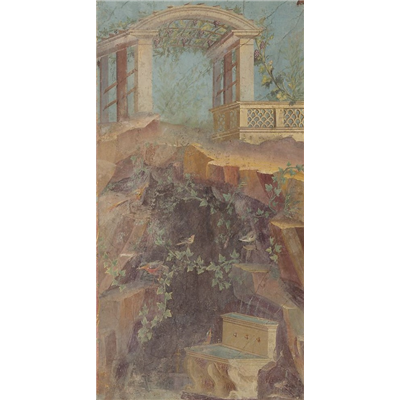 |
Dig deep into our gardens and their plants to discover fantastical tales of myth and legend that add life and colour to your garden plants. Discover bizarre but sometimes true ancient beliefs and see the seeds of our garden design. We travel back, over 2,000 years and more, to Babylon, Ancient Greece and Rome to find the blossoming of our gardens today. Perfect as a celebration of Spring. Image: 1 Design Villa of P. Fannius Synistor in Metropolitan Museum Open Access |
|
| Wednesday, 01 September 2027 |
| The Art Thief |
| Lucrezia Walker |
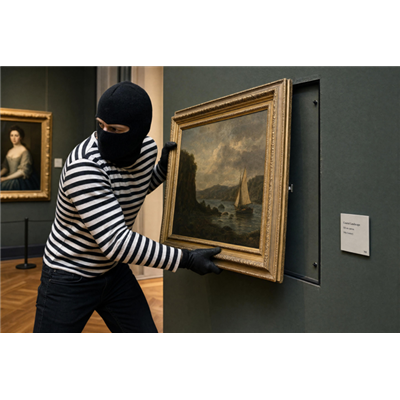 |
In his book The Art Thief Michael Finkel tells the true story of Stéphane Breitwieser, the most prolific art thief of all time. He pulled off more than 200 heists, often in crowded museums in broad daylight. His girlfriend served as his accomplice, and his collection grew to an estimated two billion dollars But he never sold a piece, displaying his stolen art in the attic bedroom in his mother’s house. Then everything came to a shocking end. It’s an extraordinary story. Image: Courtesy of Lucrezia Walker |
|
| Wednesday, 06 October 2027 |
| Munich: The Cradle of German Culture |
| Gavin Plumley |
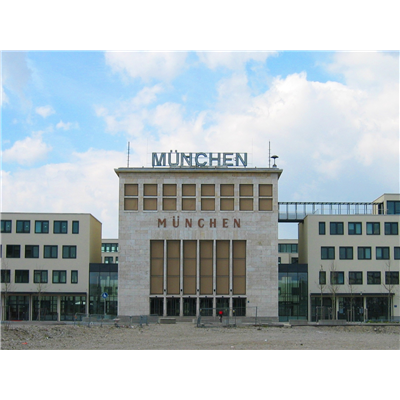 |
Munich, capital of Bavaria, was the cradle of German culture around 1900. Supported by generous patrons, including ‘mad’ King Ludwig, the city fostered an astonishing array of artists, writers and musicians. It was home to the first artistic Secession, breaking away from the city’s rich though otherwise orthodox academy, as well as the writings of Thomas Mann, the operas of Richard Wagner and Richard Strauss and the technological advances of Bayerische Motoren Werke (BMW). But just as creativity and industry thrived, all fuelled by the famous Oktoberfest, so did destruction, with the city becoming home to the new Nazi party. Image: Former airport Munich Riem, main entrance hall ("Wappenhalle") Florian Schütz, CC BY-SA 3.0 , via Wikimedia Commons |
|
| Wednesday, 03 November 2027 |
| The Art of Remembrance |
| Sophie Matthews |
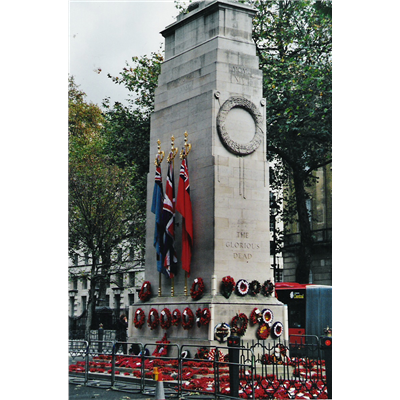 |
November 1918 saw the end of an international conflict that saw the highest casualty rate to that date. Every nation had to decide how to honour and remember its dead. This lecture explores the powerful art and design behind the memorials that mark the landscapes of the Western Front. From the solemn minimalism of Edwin Lutyens’ Thiepval Memorial to the poignant symbolism of the Menin Gate and the artistry of battlefield cemeteries, we’ll examine how architecture, sculpture, and landscape design were used to express grief, sacrifice, and national identity in the aftermath of unprecedented loss. Image: Cnyborg assumed (based on copyright claims)., CC BY-SA 3.0 via Wikimedia Commons |
|
| Wednesday, 01 December 2027 |
| David Devant, England’s Greatest Magician: All done by kindness |
| Ian Keable |
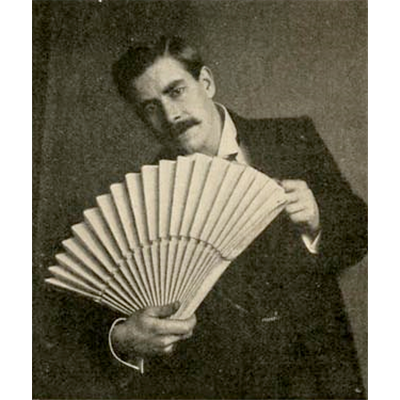 |
David Devant was the first President of The Magic Circle, the first magician to be booked on a Royal Variety Show and the second person to publicly show animated films in this country. Devant’s career is traced from working with the Royal American Midgets, through to his famous partnership with Maskelyne in the early 20th century. He is considered by many to be the greatest magician this country has ever produced, his popularity perhaps best summed up in his by-line ‘All done by kindness’. Ian performs some Devant-inspired tricks from his own repertoire during this talk. |
|